When Victory Becomes a Curse
Imagine you've just won an auction for a mysterious treasure chest. Your heart is racing, euphoria takes over. You believe that inside the chest lies a value far higher than the price you paid. But when the chest is opened, you only find old coins and sand. You've just become a victim of the 'Winner's Curse' — an economic phenomenon that has ensnared buyers for centuries.
This concept was first documented in a scientific study in 1971 by three petroleum engineers from Atlantic Richfield. They found that oil companies that won auctions for drilling rights on the Outer Continental Shelf (OCS) often received lower returns than expected — sometimes even incurring losses. Why? Because the winner was the most optimistic player about the value of the oil beneath the sea, and that optimism often exceeded reality.
The Hidden Mechanism of Common Value Auctions
To understand the 'Winner's Curse', we first need to grasp the nature of 'common value' auctions. In these auctions, the true value of the item is the same for all bidders — for example, the right to drill oil from a specific area. However, each bidder receives different signals about the value, based on imperfect geological data.
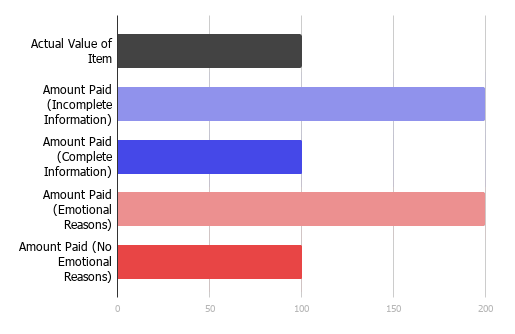
A bidder might see data indicating 100 million barrels of oil, while another bidder might see 80 million barrels. The winning bidder is the most optimistic one — the one who sees the highest signal. The problem is that the average of all signals should be closer to the true value. So, the winner tends to overestimate the true value, pays more, and is then disappointed.
This phenomenon is not just theory. In oil drilling auctions, the 'Winner's Curse' is estimated to have caused companies to pay 40% to 60% more than the true value. It's a 'curse' that affects even the most astute players without their knowledge.
Concrete Evidence: From Oil to Internet
The 'Winner's Curse' is not limited to oil wells. In the 2000s, European telecom companies paid over $100 billion for 3G spectrum licenses, only to see some of them go bankrupt or merge due to inability to generate returns. The economic winners' optimism had ensnared them in a debt trap.
On the internet, eBay auctions also became a testing ground. A 2008 study found that winning bidders for rare items like old stamps often paid 20% to 30% more than the market price. This was because bidders ignored the possibility that other bidders might have better information or that the true value of the item was lower than they thought.
Even in the art market, the 'Winner's Curse' occurs. A painting auctioned off might be valued by experts at $1 million, but the winning bidder, caught up in the excitement of the bidding war, might pay $1.5 million — only to find that the painting is actually worth no more than $1 million. Winning an auction often becomes a costly illusion.
Avoiding the Curse: Strategies for Smart Bidders
Does this mean we should avoid auctions altogether? Not at all. What's essential is strategy. A smart bidder will always adjust their bids to account for the 'Winner's Curse'. This is called 'winner's curse adjustment' — where you assume that if you win, you might have been too optimistic.
An experienced bidder will set a maximum bid based on the lowest expected value, not the highest. They will also review the history of previous auctions, evaluate the biases of other bidders, and use statistical models to estimate the true value. In oil auctions, large companies like ExxonMobil now use sophisticated algorithms that combine data from multiple sources — including seismic data and test wells — to avoid the 'curse'.
For individual bidders, the advice is simple: don't be too sure that winning is a sign of being smarter than others. Sometimes, winning is just a sign that you're the most optimistic — and that can be a costly mistake.
Broader Implications: Markets and Human Decision-Making
The 'Winner's Curse' is not just a narrow economic phenomenon. It reveals a fundamental weakness in human decision-making under uncertainty. We tend to be too confident in our own information and ignore the possibility that others might know better.
In stock markets, for example, when stock prices skyrocket, optimistic buyers often pay more than the intrinsic value. They become victims of the 'Winner's Curse' when prices later fall. This phenomenon can also be seen in real estate auctions, where homebuyers often pay more than the true value due to being influenced by the excitement of the bidding war.
Economists argue that the 'Winner's Curse' is one of the strongest evidence that markets are not always efficient. It challenges the efficient market hypothesis, which states that prices always reflect all available information. If auction winners always lose, then the market is not functioning perfectly.
Conclusion: Be Cautious of Victory
The 'Winner's Curse' reminds us that in a world full of uncertainty, winning is not always a sign of success. Sometimes, winning is just a sign that we're too confident, too optimistic, and too willing to pay for an illusion.
For bidders, whether in oil auctions, internet auctions, or stock markets, the best strategy is to always question their own information, critically evaluate data, and not be swayed by the euphoria of winning. Remember: if you win an auction at a price that's too high, you might have actually lost.
So, the next time you face an auction, ask yourself: Am I really winning, or am I just inheriting a 'curse' that will haunt my finances? The answer might be more complex than it seems.
Why Winners of Auctions Always Lose? Unveiling the 'Winner's Curse' Phenomenon. In the world of auctions, winning is often considered a triumph. However, economic studies have revealed a strange phenomenon: auction winners actually tend to pay more than the true value of the item. This article exposes the mystery of the 'Winner's Curse', from oil wells to internet auctions, and how it ensnares even the most astute players.. When Victory Becomes a Curse
Imagine you've just won an auction for a mysterious treasure chest. Your heart is racing, euphoria takes over. You believe that inside the chest lies a value far higher than the price you paid. But when the chest is opened, you only find old coins and sand. You've just become a victim of the 'Winner's Curse' — an economic phenomenon that has ensnared buyers for centuries.
This concept was first documented in a scientific study in 1971 by three petroleum engineers from Atlantic Richfield. They found that oil companies that won auctions for drilling rights on the Outer Continental Shelf OCS often received lower returns than expected — sometimes even incurring losses. Why? Because the winner was the most optimistic player about the value of the oil beneath the sea, and that optimism often exceeded reality.
The Hidden Mechanism of Common Value Auctions
To understand the 'Winner's Curse', we first need to grasp the nature of 'common value' auctions. In these auctions, the true value of the item is the same for all bidders — for example, the right to drill oil from a specific area. However, each bidder receives different signals about the value, based on imperfect geological data.
A bidder might see data indicating 100 million barrels of oil, while another bidder might see 80 million barrels. The winning bidder is the most optimistic one — the one who sees the highest signal. The problem is that the average of all signals should be closer to the true value. So, the winner tends to overestimate the true value, pays more, and is then disappointed.
This phenomenon is not just theory. In oil drilling auctions, the 'Winner's Curse' is estimated to have caused companies to pay 40% to 60% more than the true value. It's a 'curse' that affects even the most astute players without their knowledge.
Concrete Evidence: From Oil to Internet
The 'Winner's Curse' is not limited to oil wells. In the 2000s, European telecom companies paid over $100 billion for 3G spectrum licenses, only to see some of them go bankrupt or merge due to inability to generate returns. The economic winners' optimism had ensnared them in a debt trap.
On the internet, eBay auctions also became a testing ground. A 2008 study found that winning bidders for rare items like old stamps often paid 20% to 30% more than the market price. This was because bidders ignored the possibility that other bidders might have better information or that the true value of the item was lower than they thought.
Even in the art market, the 'Winner's Curse' occurs. A painting auctioned off might be valued by experts at $1 million, but the winning bidder, caught up in the excitement of the bidding war, might pay $1.5 million — only to find that the painting is actually worth no more than $1 million. Winning an auction often becomes a costly illusion.
Avoiding the Curse: Strategies for Smart Bidders
Does this mean we should avoid auctions altogether? Not at all. What's essential is strategy. A smart bidder will always adjust their bids to account for the 'Winner's Curse'. This is called 'winner's curse adjustment' — where you assume that if you win, you might have been too optimistic.
An experienced bidder will set a maximum bid based on the lowest expected value, not the highest. They will also review the history of previous auctions, evaluate the biases of other bidders, and use statistical models to estimate the true value. In oil auctions, large companies like ExxonMobil now use sophisticated algorithms that combine data from multiple sources — including seismic data and test wells — to avoid the 'curse'.
For individual bidders, the advice is simple: don't be too sure that winning is a sign of being smarter than others. Sometimes, winning is just a sign that you're the most optimistic — and that can be a costly mistake.
Broader Implications: Markets and Human Decision-Making
The 'Winner's Curse' is not just a narrow economic phenomenon. It reveals a fundamental weakness in human decision-making under uncertainty. We tend to be too confident in our own information and ignore the possibility that others might know better.
In stock markets, for example, when stock prices skyrocket, optimistic buyers often pay more than the intrinsic value. They become victims of the 'Winner's Curse' when prices later fall. This phenomenon can also be seen in real estate auctions, where homebuyers often pay more than the true value due to being influenced by the excitement of the bidding war.
Economists argue that the 'Winner's Curse' is one of the strongest evidence that markets are not always efficient. It challenges the efficient market hypothesis, which states that prices always reflect all available information. If auction winners always lose, then the market is not functioning perfectly.
Conclusion: Be Cautious of Victory
The 'Winner's Curse' reminds us that in a world full of uncertainty, winning is not always a sign of success. Sometimes, winning is just a sign that we're too confident, too optimistic, and too willing to pay for an illusion.
For bidders, whether in oil auctions, internet auctions, or stock markets, the best strategy is to always question their own information, critically evaluate data, and not be swayed by the euphoria of winning. Remember: if you win an auction at a price that's too high, you might have actually lost.
So, the next time you face an auction, ask yourself: Am I really winning, or am I just inheriting a 'curse' that will haunt my finances? The answer might be more complex than it seems.