AI
Kandungan Ditaja (Sponsored)
Tardigrade: Microscopic Animal Capable of Surviving Nuclear Radiation and Space Vacuum - Discovery of DNA-Protecting Protein Challenges Biology. Tardigrades, or water bears, are extremophile microorganisms known for their extraordinary ability to survive the most extreme conditions such as high radiation, total dehydration, extreme temperatures, and the vacuum of space. The latest study, published in the journal Nature Communications, reveals the molecular mechanism behind this resilience: a unique protein called Dsup (Damage Suppressor) that protects DNA from radiation damage. This discovery not only challenges our understanding of the limits of life but also opens up immense potential in medicine, biotechnology, and space exploration.. Introduction: Tiny Creatures with Super Resilience
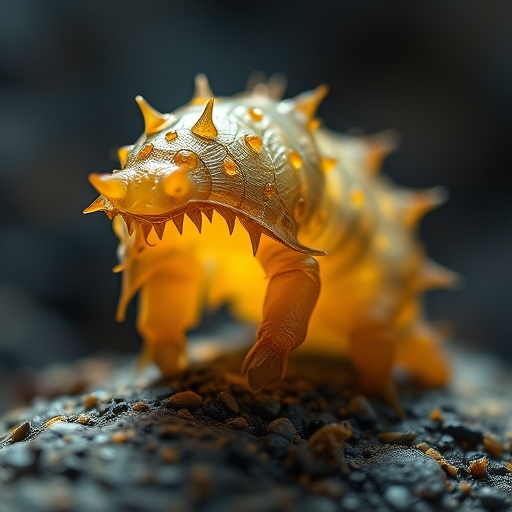
In the microscopic world, there exists an animal that might seem like an alien creature: the tardigrade. Measuring only 0.1 to 1.5 millimeters in length, these animals are often called 'water bears' due to their plump body shape and eight short legs. However, despite their small size, tardigrades possess capabilities that are almost impossible in the biological world. They can survive temperatures as low as -272°C near absolute zero to as high as 150°C, pressures six times greater than the deepest ocean trenches, gamma radiation lethal to humans, and even the vacuum of outer space. How can such tiny creatures achieve all this? The answer lies in a unique protein discovered by researchers from the University of Tokyo.
Study Methodology: Unveiling the Molecular Mechanism
The study, published in Nature Communications in 2016 by a research team led by Dr. Takekazu Kunieda from the University of Tokyo, employed genomic and biochemical approaches to understand tardigrade radiation resistance. They compared the highly radiation-resistant tardigrade species Ramazzottius varieornatus with other less resistant species. Through transcriptome analysis, they identified genes that express a unique protein named Dsup Damage Suppressor . Further tests involved expressing the Dsup protein in cultured human cells, which were then exposed to X-rays. The results showed that human cells containing Dsup experienced a 40% reduction in DNA damage compared to control cells.
Key Discovery: Dsup Protein as a DNA Shield
The Dsup protein is a very special molecule. It functions by directly binding to the DNA double helix, forming a protective layer that reduces the effects of ionizing radiation. Radiation such as gamma rays and X-rays typically breaks DNA strands by producing highly reactive free radicals. Dsup acts like a molecular shield, absorbing radiation energy and preventing free radicals from reaching the DNA. Further studies using electron microscopy and molecular dynamics simulations showed that Dsup forms a cloud-like structure around the DNA, physically preventing harmful molecules from approaching the genetic material. This discovery is revolutionary because, previously, scientists assumed that tardigrade radiation resistance was a result of various mechanisms like antioxidants and efficient DNA repair, but Dsup demonstrates a more direct preventive approach.
Biological Implications: Challenging the Limits of Life
The tardigrade's ability to enter a state of cryptobiosis a state of suspended metabolism also plays a crucial role. When the environment becomes too extreme, tardigrades dry out their bodies until only 1% of their water content remains, forming a barrel-like structure called a 'tun'. In this state, metabolism completely halts, and the Dsup protein continues to protect the DNA. When conditions return to normal, tardigrades reactivate their metabolism within hours. This discovery challenges the definition of life itself: is an organism that can 'die' and 'come back to life' still considered alive? More importantly, it shows that life can exist in environments previously thought impossible, such as on Mars or its moon Europa.
Potential Applications: From Medicine to Space
The discovery of the Dsup protein opens doors to various technological applications. In medicine, Dsup could be used to protect the DNA of patients undergoing cancer radiotherapy, reducing the side effects of radiation on healthy cells. In biotechnology, enzymes and cells engineered with Dsup could be used in industrial processes requiring resistance to radiation or dehydration. In space exploration, tardigrades themselves have been sent to the International Space Station ISS on experimental missions, and they were found to survive the vacuum of space and cosmic radiation. Research by a team from the University of Copenhagen in 2021 showed that tardigrades exposed to radiation in space could still reproduce after returning to Earth. This offers hope that life could be transported between planets, or even that tardigrades might serve as a model for microscopic 'space colonies'.
Challenges and Controversies: Is Dsup a Miracle?
Despite the astonishing discovery of Dsup, debates still exist among scientists. Some researchers argue that Dsup is only part of the tardigrade's resistance mechanism. Other tardigrade species, such as Hypsibius dujardini , do not possess Dsup but are still radiation-resistant to a certain extent. This suggests that other undiscovered mechanisms are at play. Furthermore, the expression of Dsup in human cells only provides partial protection, and its long-term effects on cell function are yet to be fully studied. However, most scientists agree that Dsup is a significant discovery that paves the way for further research.
Conclusion: Nature's Inspiring Marvels
Tardigrades are proof that nature still holds many secrets waiting to be discovered. The Dsup protein is just one of many mechanisms that allow these tiny animals to survive in conditions lethal to most organisms. This discovery not only expands our understanding of the limits of life but also inspires technological innovations that could benefit humanity. Whether in cancer treatment, space exploration, or fundamental understanding of molecular biology, tardigrades have proven that size is not a measure of strength. Perhaps one day, we will be able to use tardigrade secrets to protect human DNA on missions to Mars or even to extend human lifespan. The universe is full of surprises, and the tardigrade is one of its most amazing ones.
Tags: