🌍 Global coverage 24/7 • 🏯 East Asia: China, Japan, Korea • 🛕 South Asia: India • 🏰 Europe • 🗽 Americas • 🌍 Africa • 🕌 Middle East • 🇵🇸 Palestine Solidarity •
This article is a translation from the original language.
🧠 Did You Know
This Medieval Trade Route Connected Vikings with Baghdad — The Uncovered Secret!
The often-forgotten world route, the Volga Trade Route, connected the frozen forests of Scandinavia with the dazzling Islamic cities of the Middle East. Through long and winding rivers, luxury goods such as furs, honey, and slaves were exchanged for silver, spices, and even chess. Discover how this route changed history and connected vastly different cultures.
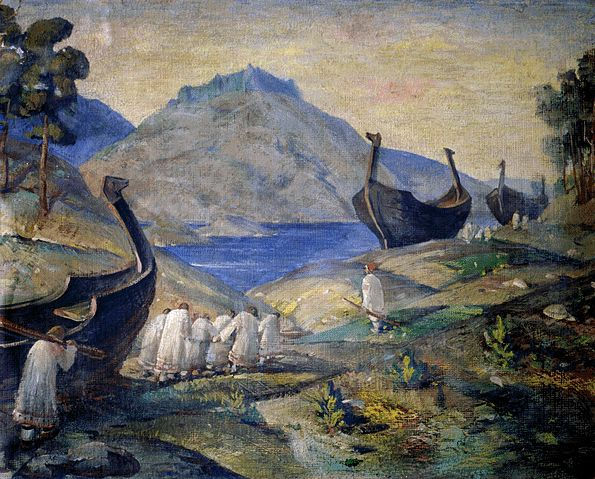
Image: Foto: Wikipedia — Volga trade route (CC BY-SA 4.0)
AI
1. Vikings Were Not Just Raiders, They Were Traders on the Volga Route
When we hear the word Viking, the image that usually comes to mind is longships, lightning attacks, and war axes. However, far from this fierce image, the Vikings from Sweden, Denmark, and Norway were skilled traders who mastered the Volga Trade Route. This route was not just a waterway; it was the lifeline of trade between Northern Europe and the Islamic world. From cities like Birka in Sweden, they sailed east, crossing the Baltic Sea, and entering rivers that took them deep into Russia. There, they met Slavic and Bulgar tribes, exchanging goods in a highly organized manner. Silver from the east, especially dirhams from the Abbasid Caliphate, flowed into Scandinavia in extraordinary quantities. Archaeological discoveries in Sweden and Denmark show thousands of Islamic silver coins, proving how important this route was. So, when you see an image of Vikings, remember that they were also brave merchants who traveled thousands of miles to trade.
2. Volga Bulgaria: The Kingdom That Became a Center of Trade and Spread of Islam
In the middle of the Volga Route, there was a strong and prosperous kingdom: Volga Bulgaria. Do not confuse them with Bulgaria in the Balkans; they are cousins who separated centuries ago. Volga Bulgaria was a semi-nomadic confederation that controlled the middle and lower parts of the Volga River. Their capital, Bulgar (now an ancient city near Kazan), was a busy trading center. Here, northern traders met caravans from the south. Volga Bulgaria was not only a trade intermediary but also a center for the spread of Islam in the region. Their king, Almus, converted to Islam in the early 10th century, and since then, Islam spread among the Bulgars. They built mosques, schools, and beautiful palaces. Another important center, Suvar, also became a hub for scholars and traders. Through Volga Bulgaria, goods such as furs, honey, beeswax, and slaves from the north were exchanged for silver, copper, spices, silk, and jewelry from the east. This kingdom played a very important role, surviving for centuries before finally being conquered by the Mongol Empire in the 13th century.
3. From Furs to Chess: Surprising Goods Traded
What was traded on the Volga Route? The list is long and fascinating. From the north, Russian and Ugrian traders (inhabitants of the Ural region) brought valuable furs: sable, marten, fox, and bear. These furs were highly sought after in the palaces of Baghdad and Constantinople. In addition to furs, they also brought honey, beeswax (used for church and palace candles), and slaves. These slaves, mostly from Slavic tribes, were sold in southern markets. From the south, Muslim traders brought silver in the form of dirham coins, copper, jewelry, fine silk, spices such as cinnamon and black pepper, glass, and weapons. One of the most interesting items that entered Russia through this route was the game of chess. Yes, chess was introduced to medieval Russia through the Caspian-Volga route from Persia and Arab lands. This strategic game quickly became popular among nobles and common people alike. So, the next time you play chess, remember that the moves of the knight and rook may have originated from journeys along the Volga River.
4. Twin Routes: The Volga Route and the Dnieper Route
The Volga Trade Route did not function alone. It had a well-known 'rival': the Dnieper Trade Route, more commonly known as the 'Route from the Varangians to the Greeks'. The Dnieper Route connected the Baltic Sea with the Black Sea and Constantinople, the capital of the Byzantine Empire. Both routes functioned at the same time, but had different focuses. The Volga Route was more focused on trade with the Islamic world, while the Dnieper Route was more focused on trade with Byzantium. However, there were intersections between them. For example, in the Smolensk area, there was a route connecting the Western Dvina River with the Dnieper River. The town of Gnezdovo, near Smolensk, was an important center where traders from both routes met. Here, goods from the north, east, and south mixed. Archaeological findings in Gnezdovo showed the presence of Scandinavians, Slavs, and Bulgarians, all trading and living together. The Volga Route began to lose its importance in the 11th century, possibly due to political changes in the east, such as the rise of nomadic tribes that disrupted the route, or changes in market demand. Nevertheless, its legacy remains in the form of cultural connections, the spread of religion, and the flow of wealth that shaped the history of Eastern Europe and Western Asia.
This Medieval Trade Route Connected Vikings with Baghdad — The Uncovered Secret!. The often-forgotten world route, the Volga Trade Route, connected the frozen forests of Scandinavia with the dazzling Islamic cities of the Middle East. Through long and winding rivers, luxury goods such as furs, honey, and slaves were exchanged for silver, spices, and even chess. Discover how this route changed history and connected vastly different cultures.. 1. Vikings Were Not Just Raiders, They Were Traders on the Volga Route
When we hear the word Viking, the image that usually comes to mind is longships, lightning attacks, and war axes. However, far from this fierce image, the Vikings from Sweden, Denmark, and Norway were skilled traders who mastered the Volga Trade Route. This route was not just a waterway; it was the lifeline of trade between Northern Europe and the Islamic world. From cities like Birka in Sweden, they sailed east, crossing the Baltic Sea, and entering rivers that took them deep into Russia. There, they met Slavic and Bulgar tribes, exchanging goods in a highly organized manner. Silver from the east, especially dirhams from the Abbasid Caliphate, flowed into Scandinavia in extraordinary quantities. Archaeological discoveries in Sweden and Denmark show thousands of Islamic silver coins, proving how important this route was. So, when you see an image of Vikings, remember that they were also brave merchants who traveled thousands of miles to trade.
2. Volga Bulgaria: The Kingdom That Became a Center of Trade and Spread of Islam
In the middle of the Volga Route, there was a strong and prosperous kingdom: Volga Bulgaria. Do not confuse them with Bulgaria in the Balkans; they are cousins who separated centuries ago. Volga Bulgaria was a semi-nomadic confederation that controlled the middle and lower parts of the Volga River. Their capital, Bulgar now an ancient city near Kazan , was a busy trading center. Here, northern traders met caravans from the south. Volga Bulgaria was not only a trade intermediary but also a center for the spread of Islam in the region. Their king, Almus, converted to Islam in the early 10th century, and since then, Islam spread among the Bulgars. They built mosques, schools, and beautiful palaces. Another important center, Suvar, also became a hub for scholars and traders. Through Volga Bulgaria, goods such as furs, honey, beeswax, and slaves from the north were exchanged for silver, copper, spices, silk, and jewelry from the east. This kingdom played a very important role, surviving for centuries before finally being conquered by the Mongol Empire in the 13th century.
3. From Furs to Chess: Surprising Goods Traded
What was traded on the Volga Route? The list is long and fascinating. From the north, Russian and Ugrian traders inhabitants of the Ural region brought valuable furs: sable, marten, fox, and bear. These furs were highly sought after in the palaces of Baghdad and Constantinople. In addition to furs, they also brought honey, beeswax used for church and palace candles , and slaves. These slaves, mostly from Slavic tribes, were sold in southern markets. From the south, Muslim traders brought silver in the form of dirham coins, copper, jewelry, fine silk, spices such as cinnamon and black pepper, glass, and weapons. One of the most interesting items that entered Russia through this route was the game of chess. Yes, chess was introduced to medieval Russia through the Caspian-Volga route from Persia and Arab lands. This strategic game quickly became popular among nobles and common people alike. So, the next time you play chess, remember that the moves of the knight and rook may have originated from journeys along the Volga River.
4. Twin Routes: The Volga Route and the Dnieper Route
The Volga Trade Route did not function alone. It had a well-known 'rival': the Dnieper Trade Route, more commonly known as the 'Route from the Varangians to the Greeks'. The Dnieper Route connected the Baltic Sea with the Black Sea and Constantinople, the capital of the Byzantine Empire. Both routes functioned at the same time, but had different focuses. The Volga Route was more focused on trade with the Islamic world, while the Dnieper Route was more focused on trade with Byzantium. However, there were intersections between them. For example, in the Smolensk area, there was a route connecting the Western Dvina River with the Dnieper River. The town of Gnezdovo, near Smolensk, was an important center where traders from both routes met. Here, goods from the north, east, and south mixed. Archaeological findings in Gnezdovo showed the presence of Scandinavians, Slavs, and Bulgarians, all trading and living together. The Volga Route began to lose its importance in the 11th century, possibly due to political changes in the east, such as the rise of nomadic tribes that disrupted the route, or changes in market demand. Nevertheless, its legacy remains in the form of cultural connections, the spread of religion, and the flow of wealth that shaped the history of Eastern Europe and Western Asia.
---
Reference: Volga trade route — Wikipedia https://en.wikipedia.org/wiki/Volga trade route