A Morning That Turned Into a Nightmare
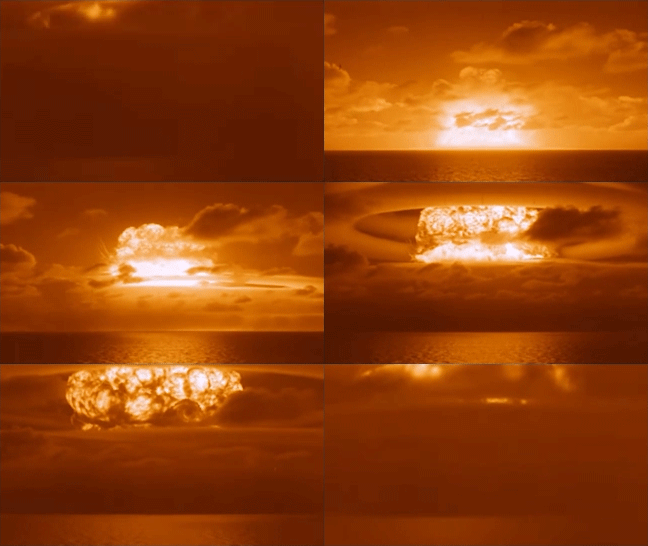
Imagine waking up one morning on a tropical island in the Pacific Ocean. Fresh air, calm waves, and you might be preparing to fish. But on March 1, 1954, the inhabitants of Rongelap and Utirik Atolls were shocked by an experience that was utterly incomprehensible. The usually clear blue sky was suddenly covered by strange mushroom-shaped clouds rising high. Then, fine white dust began to fall like snow—but it was not ordinary snow. It was radioactive ash from the strongest bomb ever detonated by the United States:
Castle Bravo.
This bomb was part of the Operation Castle series, designed to test the design of a new generation of nuclear weapons. However, what started as a scientific experiment turned into a lasting human and environmental disaster in history. Scientists had expected an explosion of 6 megatons, but the reality was 2.5 times stronger: 15 megatons of TNT. That is equivalent to 15 million tons of conventional explosives. Imagine—just one bomb was enough to destroy a large city several times over.
The Secret Behind the Wild Explosion
What made Castle Bravo so special (and terrifying) was its fuel. Previously, hydrogen bombs used deuterium (a hydrogen isotope) that needed to be cooled to cryogenic temperatures, making it difficult to handle. However, Castle Bravo used
lithium deuteride—a solid compound stable at room temperature. This was a revolution in weapon technology because it allowed for more compact and transportable bombs.
But here was the big surprise: Scientists did not expect that the lithium-7 isotope, which makes up 60% of natural lithium, would also react. When the bomb was detonated, neutrons from the initial explosion interacted with lithium-7 and produced tritium, which then served as additional fuel for fusion. The result was energy released far exceeding predictions. If they had known, perhaps stricter control measures would have been taken. But history records that they did not know, and the consequences were devastating.
Radioactive Traces Spanning the Oceans
When the bomb exploded, it vaporized the entire part of the atoll where it was placed. Coral rocks, sand, and seawater—all turned into a very fine cloud of radioactive dust. The northwesterly winds then carried this ash eastward, directly toward inhabited atolls. Within a few hours, the residents of Rongelap and Utirik began experiencing nausea, vomiting, and burned skin—all early signs of acute radiation sickness.
What was more tragic, the US military only relocated them three days later. By then, they had already been exposed to extremely high levels of radiation. Subsequent studies showed that children on these islands suffered from thyroid problems and cancer at an extraordinary rate. Not only that, some of the radioactive dust also spread worldwide through air currents. Several weeks later, rain samples in Europe and Asia contained traces of radiation from this explosion.
Fishing Boat Becoming an Icon of Tragedy
One of the most famous incidents involved
Daigo Fukuryū Maru, or "The Lucky Dragon No. 5," a Japanese fishing boat operating outside the declared danger zone. But on that morning, they saw an unusual flash on the western horizon, and several hours later, white ash began to fall on their deck. The fishermen did not know what had happened. They continued working, catching fish, and breathing in the toxic dust.
When they returned to the port in Yaizu, Japan, they were in critical condition. Hair loss, burned skin, and high fever. Local doctors were confused, but eventually, they identified the cause: nuclear radiation. This incident sparked great public anger in Japan, still traumatized by Hiroshima and Nagasaki. The fish they caught were sold in the market, causing panic about seafood safety. Eventually, one radio operator on the boat died from radiation complications, while others suffered lifelong illnesses.
A Bitter Lesson Never Forgotten
Castle Bravo was not just a weapons test; it was a reminder of how easily we underestimate nature's power and technology. Although this bomb was an impressive scientific achievement, it also revealed human weaknesses in predicting and controlling the consequences of our actions. To this day, original inhabitants of Bikini Atoll are still unable to return to their homes due to high radiation levels in the soil. The land, once fertile, has now become a radioactive desert.
For us living in the modern era, the story of Castle Bravo is a lesson in responsibility. When we create something extremely powerful, we must be prepared to face its consequences—not only for ourselves, but for all creatures on this planet. And perhaps most importantly, it reminds us that scientific arrogance can bring disaster if not balanced with vigilance and ethics.
So, on that bright day in the Pacific, humanity wrote a chapter in history that will never fade—not because of success, but because of the tragedy etched in the radioactive ash swirling in the air.
---
Reference: Castle Bravo — Wikipedia
Castle Bravo Explosion: US Bomb 2.5 Times Stronger Than Expected, Residents Exposed to Radiation!. On March 1, 1954, the United States tested the Castle Bravo hydrogen bomb at Bikini Atoll. Its explosion reached 15 megatons, far exceeding expectations, causing widespread radioactive contamination and injuring local residents and Japanese fishing boat crew members.. A Morning That Turned Into a Nightmare
Imagine waking up one morning on a tropical island in the Pacific Ocean. Fresh air, calm waves, and you might be preparing to fish. But on March 1, 1954, the inhabitants of Rongelap and Utirik Atolls were shocked by an experience that was utterly incomprehensible. The usually clear blue sky was suddenly covered by strange mushroom-shaped clouds rising high. Then, fine white dust began to fall like snow—but it was not ordinary snow. It was radioactive ash from the strongest bomb ever detonated by the United States: Castle Bravo .
This bomb was part of the Operation Castle series, designed to test the design of a new generation of nuclear weapons. However, what started as a scientific experiment turned into a lasting human and environmental disaster in history. Scientists had expected an explosion of 6 megatons, but the reality was 2.5 times stronger: 15 megatons of TNT. That is equivalent to 15 million tons of conventional explosives. Imagine—just one bomb was enough to destroy a large city several times over.
The Secret Behind the Wild Explosion
What made Castle Bravo so special and terrifying was its fuel. Previously, hydrogen bombs used deuterium a hydrogen isotope that needed to be cooled to cryogenic temperatures, making it difficult to handle. However, Castle Bravo used lithium deuteride —a solid compound stable at room temperature. This was a revolution in weapon technology because it allowed for more compact and transportable bombs.
But here was the big surprise: Scientists did not expect that the lithium-7 isotope, which makes up 60% of natural lithium, would also react. When the bomb was detonated, neutrons from the initial explosion interacted with lithium-7 and produced tritium, which then served as additional fuel for fusion. The result was energy released far exceeding predictions. If they had known, perhaps stricter control measures would have been taken. But history records that they did not know, and the consequences were devastating.
Radioactive Traces Spanning the Oceans
When the bomb exploded, it vaporized the entire part of the atoll where it was placed. Coral rocks, sand, and seawater—all turned into a very fine cloud of radioactive dust. The northwesterly winds then carried this ash eastward, directly toward inhabited atolls. Within a few hours, the residents of Rongelap and Utirik began experiencing nausea, vomiting, and burned skin—all early signs of acute radiation sickness.
What was more tragic, the US military only relocated them three days later. By then, they had already been exposed to extremely high levels of radiation. Subsequent studies showed that children on these islands suffered from thyroid problems and cancer at an extraordinary rate. Not only that, some of the radioactive dust also spread worldwide through air currents. Several weeks later, rain samples in Europe and Asia contained traces of radiation from this explosion.
Fishing Boat Becoming an Icon of Tragedy
One of the most famous incidents involved Daigo Fukuryū Maru , or "The Lucky Dragon No. 5," a Japanese fishing boat operating outside the declared danger zone. But on that morning, they saw an unusual flash on the western horizon, and several hours later, white ash began to fall on their deck. The fishermen did not know what had happened. They continued working, catching fish, and breathing in the toxic dust.
When they returned to the port in Yaizu, Japan, they were in critical condition. Hair loss, burned skin, and high fever. Local doctors were confused, but eventually, they identified the cause: nuclear radiation. This incident sparked great public anger in Japan, still traumatized by Hiroshima and Nagasaki. The fish they caught were sold in the market, causing panic about seafood safety. Eventually, one radio operator on the boat died from radiation complications, while others suffered lifelong illnesses.
A Bitter Lesson Never Forgotten
Castle Bravo was not just a weapons test; it was a reminder of how easily we underestimate nature's power and technology. Although this bomb was an impressive scientific achievement, it also revealed human weaknesses in predicting and controlling the consequences of our actions. To this day, original inhabitants of Bikini Atoll are still unable to return to their homes due to high radiation levels in the soil. The land, once fertile, has now become a radioactive desert.
For us living in the modern era, the story of Castle Bravo is a lesson in responsibility. When we create something extremely powerful, we must be prepared to face its consequences—not only for ourselves, but for all creatures on this planet. And perhaps most importantly, it reminds us that scientific arrogance can bring disaster if not balanced with vigilance and ethics.
So, on that bright day in the Pacific, humanity wrote a chapter in history that will never fade—not because of success, but because of the tragedy etched in the radioactive ash swirling in the air.
---
Reference: Castle Bravo — Wikipedia https://en.wikipedia.org/wiki/Castle Bravo