Background: The Montenegrin-Ottoman Conflict 1876-78
In the mid-19th century, the weakening Ottoman Empire tried to maintain its grip over the rebellious Balkan regions. Montenegro, a small kingdom surrounded by mountains, had long resisted Ottoman rule. In 1876, tensions escalated when the uprising in Herzegovina spread to Montenegro, triggering the Montenegrin-Ottoman War 1876-78. Sultan Abdul Hamid II ordered a large-scale attack to subdue Montenegro, assigning one of his best generals, Ahmed Muhtar Pasha, as Grand Vizier and military commander.
Ahmed Muhtar Pasha, known for his success on the Caucasus battlefield, led an army equipped with modern artillery, repeating rifles, and sufficient supplies. His objective was to attack the heart of Montenegro through the strategic pass at Vučji Do, a valley surrounded by steep hills and dense forests. However, what Pasha did not realize was that this terrain was a natural fortress for the local forces who were skilled in moving through difficult areas.
The Battle of July 18, 1876: Ambush in the Valley of Death
On the morning of July 18, 1876, approximately 15,000 Ottoman troops began advancing into Vučji Do. They consisted of regular soldiers, volunteers, and cavalry, supported by artillery. Meanwhile, the combined Montenegrin and Herzegovinian forces, numbering around 8,000, comprised local tribes armed with old rifles and traditional weapons such as knives and swords. Their commander, Prince Nikola I of Montenegro, used clever guerrilla tactics.
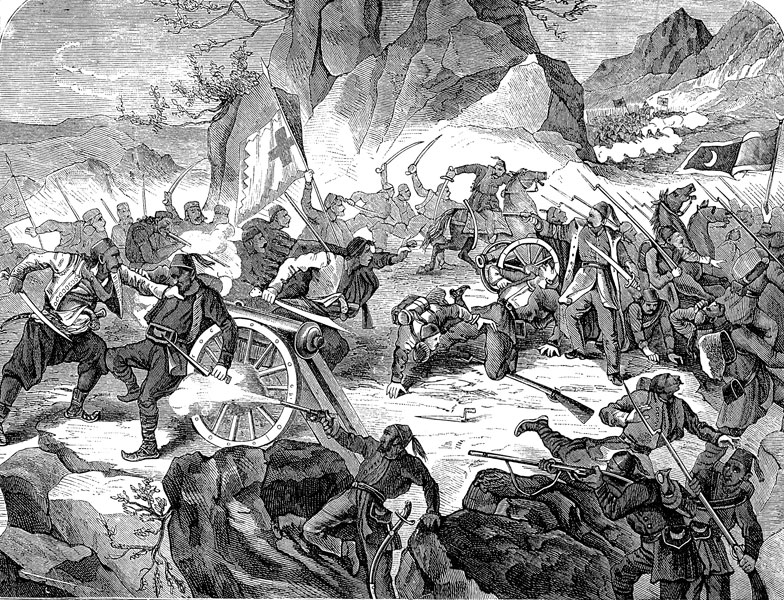
As Ottoman soldiers entered the valley, they were caught in a well-planned ambush. Montenegrin forces hid behind rocks and trees on the hill slopes, firing volleys of shots at the enemy troops trapped in the narrow passage. Ottoman artillery became useless due to the unsuitable position for shooting upwards. In the chaos, two Ottoman commanders—Osman Pasha and Hüseyin Pasha—were taken alive, adding to the humiliating defeat.
Factors of Victory: Bravery and Local Knowledge
Montenegro's success at Vučji Do was not only due to the terrain but also their high fighting spirit. These tribes fought for their homeland and freedom, while most Ottoman troops were mercenaries or conscripts without motivation. Additionally, local residents acting as spies provided accurate information about enemy movements. The "hit-and-run" tactics used by Montenegro caused significant losses among the Ottomans, with an estimated 3,000 to 5,000 killed or wounded, compared to only 500 casualties on the Montenegrin side.
The capture of two enemy commanders also gave Montenegro a diplomatic advantage. Osman Pasha was an experienced general, and this defeat affected the morale of the Ottoman army. In this battle, Montenegrin forces also seized more than 3,000 rifles, cannons, and bullets, which were later used to arm rebels in Herzegovina.
Aftermath: Impact on the War and Balkan Politics
The victory at Vučji Do became a turning point in the war. It proved that a small, motivated army could defeat a large empire with the right strategy. News of this victory spread throughout Europe, drawing the attention of major powers such as Russia and Austria-Hungary. This eventually led to international intervention in the Russo-Turkish War 1877-78, which forced the Ottomans to recognize Montenegro's de facto independence in the Treaty of Berlin 1878.
Although the war continued for another two years, the battle of Vučji Do became a symbol of Montenegrin courage and resilience. The name Vučji Do is now immortalized as a war monument visited by many, reminding future generations of the sacrifices made for independence.
Legacy: Lessons from Vučji Do
This battle also highlighted the importance of adapting tactics to the terrain. The Ottoman army, overly reliant on modern technology, failed to adapt to the challenging Balkan battlefield. Instead, Montenegrin tribes used local knowledge and patriotic spirit to overcome the material advantages of their enemies. Today, Vučji Do is recognized as one of the most important battles in Montenegrin history, often taught in schools as an example of successful defensive strategy.
For readers in Nusantara, this story reminds us that the struggle against colonialism often requires courage and ingenuity. Small Montenegro was able to challenge the great Ottoman Empire, inspiring independence movements worldwide. Vučji Do is not just a battle—it is a symbol of human resilience in the pursuit of freedom.
---
Reference: Battle of Vučji Do — Wikipedia
The Battle of Vučji Do: A Humiliating Defeat of the Ottoman Empire at the Hands of Mountain Tribes. On July 18, 1876, in a remote valley in Montenegro, the Ottoman Empire's army, led by Grand Vizier Ahmed Muhtar Pasha, suffered a severe defeat at the hands of a combined Montenegrin and Herzegovinian force. This battle not only defeated two enemy commanders but also captured valuable weapons. How were these untrained mountain tribes able to defeat an organized army? This article reveals the strategies, bravery, and consequences of this historic event.. Background: The Montenegrin-Ottoman Conflict 1876-78
In the mid-19th century, the weakening Ottoman Empire tried to maintain its grip over the rebellious Balkan regions. Montenegro, a small kingdom surrounded by mountains, had long resisted Ottoman rule. In 1876, tensions escalated when the uprising in Herzegovina spread to Montenegro, triggering the Montenegrin-Ottoman War 1876-78. Sultan Abdul Hamid II ordered a large-scale attack to subdue Montenegro, assigning one of his best generals, Ahmed Muhtar Pasha, as Grand Vizier and military commander.
Ahmed Muhtar Pasha, known for his success on the Caucasus battlefield, led an army equipped with modern artillery, repeating rifles, and sufficient supplies. His objective was to attack the heart of Montenegro through the strategic pass at Vučji Do, a valley surrounded by steep hills and dense forests. However, what Pasha did not realize was that this terrain was a natural fortress for the local forces who were skilled in moving through difficult areas.
The Battle of July 18, 1876: Ambush in the Valley of Death
On the morning of July 18, 1876, approximately 15,000 Ottoman troops began advancing into Vučji Do. They consisted of regular soldiers, volunteers, and cavalry, supported by artillery. Meanwhile, the combined Montenegrin and Herzegovinian forces, numbering around 8,000, comprised local tribes armed with old rifles and traditional weapons such as knives and swords. Their commander, Prince Nikola I of Montenegro, used clever guerrilla tactics.
As Ottoman soldiers entered the valley, they were caught in a well-planned ambush. Montenegrin forces hid behind rocks and trees on the hill slopes, firing volleys of shots at the enemy troops trapped in the narrow passage. Ottoman artillery became useless due to the unsuitable position for shooting upwards. In the chaos, two Ottoman commanders—Osman Pasha and Hüseyin Pasha—were taken alive, adding to the humiliating defeat.
Factors of Victory: Bravery and Local Knowledge
Montenegro's success at Vučji Do was not only due to the terrain but also their high fighting spirit. These tribes fought for their homeland and freedom, while most Ottoman troops were mercenaries or conscripts without motivation. Additionally, local residents acting as spies provided accurate information about enemy movements. The "hit-and-run" tactics used by Montenegro caused significant losses among the Ottomans, with an estimated 3,000 to 5,000 killed or wounded, compared to only 500 casualties on the Montenegrin side.
The capture of two enemy commanders also gave Montenegro a diplomatic advantage. Osman Pasha was an experienced general, and this defeat affected the morale of the Ottoman army. In this battle, Montenegrin forces also seized more than 3,000 rifles, cannons, and bullets, which were later used to arm rebels in Herzegovina.
Aftermath: Impact on the War and Balkan Politics
The victory at Vučji Do became a turning point in the war. It proved that a small, motivated army could defeat a large empire with the right strategy. News of this victory spread throughout Europe, drawing the attention of major powers such as Russia and Austria-Hungary. This eventually led to international intervention in the Russo-Turkish War 1877-78, which forced the Ottomans to recognize Montenegro's de facto independence in the Treaty of Berlin 1878.
Although the war continued for another two years, the battle of Vučji Do became a symbol of Montenegrin courage and resilience. The name Vučji Do is now immortalized as a war monument visited by many, reminding future generations of the sacrifices made for independence.
Legacy: Lessons from Vučji Do
This battle also highlighted the importance of adapting tactics to the terrain. The Ottoman army, overly reliant on modern technology, failed to adapt to the challenging Balkan battlefield. Instead, Montenegrin tribes used local knowledge and patriotic spirit to overcome the material advantages of their enemies. Today, Vučji Do is recognized as one of the most important battles in Montenegrin history, often taught in schools as an example of successful defensive strategy.
For readers in Nusantara, this story reminds us that the struggle against colonialism often requires courage and ingenuity. Small Montenegro was able to challenge the great Ottoman Empire, inspiring independence movements worldwide. Vučji Do is not just a battle—it is a symbol of human resilience in the pursuit of freedom.
---
Reference: Battle of Vučji Do — Wikipedia https://en.wikipedia.org/wiki/Battle of Vu%C4%8Dji Do